&geometry(423x99) "McMurter & Associates")
Do Common-Law Partners Inherit in Ontario? What Happens Without a Will
The short answer: No. In Ontario, a common-law partner does not automatically inherit when their partner dies without a will. Under the Succession Law Reform Act, only legally married spouses share in an estate on intestacy (when there's no valid will). It doesn't matter how long you've lived together or how much you've built as a couple.
If your common-law partner died tomorrow without a will, would you inherit anything? Many people are surprised by the answer, and the surprise usually comes at the worst possible time.
How does Ontario law treat common-law partners when there's no will?
When someone dies without a valid will in Ontario, the Succession Law Reform Actdecides who inherits. The Act follows a fixed formula based on legal relationships, not on who shared the person's life.
For inheritance purposes, "spouse" means a legally married spouse. Common-law partners are not included, even if you've lived together for decades, share a home, and have always called each other spouses.
If your common-law partner died tomorrow without a will, would you inherit anything? Many people are surprised by the answer.
Who inherits if there's no will and no legal spouse?
Without a married spouse, the estate goes to legal relatives in this order:
- Children share the estate equally (a child's share passes to their own children if the child has died).
- Parents, if there are no children.
- Siblings, then nieces and nephews.
- More distant blood relatives.
For comparison, a married spouse receives the first $350,000 of the estate (for deaths on or after March 1, 2021), plus a share of the remainder if there are children. A common-law partner receives nothing under these rules.
What does this look like in real life? Sarah and Daniel's story
Sarah and Daniel lived together in Whitby for over 12 years. They built a home, shared expenses, and raised Sarah's daughter from a previous relationship. They always called each other spouses, though they never legally married. The house was in Sarah's name alone, and they never got around to making wills.
When Sarah passed away unexpectedly, Daniel assumed everything, including the house and its contents, would naturally go to him.
Instead, Sarah was considered to have died "intestate" (without a will), and Daniel was not recognized as a spouse under the Act. Sarah's daughter was the legal heir, with Sarah's extended family, who had never been part of their daily lives, stepping in to help manage the estate.
Daniel had no automatic right to the home he had helped pay for and maintain for over a decade. How the home's title is taken matters more than how long you've been together, as we discussed in a previous post. When Sarah's relatives began talking about selling the property, Daniel, with limited savings and no legal ownership, had to consider moving out of the home he thought was his.
In the end, despite years of partnership, Daniel was left pursuing a costly legal claim just to try to secure a fair share of what he and Sarah had built together.
Can a surviving common-law partner still make a claim?
Sometimes, but it's not simple or guaranteed. A surviving partner may be able to:
- Apply for dependant's support under the Succession Law Reform Act, if they meet the law's definition of a common-law spouse (generally, living together for at least three years, or in a relationship of some permanence with a child together).
- Make an unjust enrichment claim, arguing they contributed to property that's legally in the other person's name.
Both routes involve court applications, legal costs, strict deadlines, and uncertain outcomes, often while you're grieving. A will is far simpler.
What assets pass outside the will?
Some assets skip the estate entirely and go straight to a named person:
- Property held jointly with right of survivorship
- RRSPs, RRIFs, TFSAs, pensions, and life insurance with a named beneficiary
These can help protect a partner, but only if they're set up correctly. A mismatch between your will, your property title, and your beneficiary forms is a common and costly problem.
How can common-law couples protect each other?
The good news is that this outcome is avoidable. Practical steps include:
- Make a will. Naming your partner as a beneficiary is the most direct protection.
- Review how you hold your home. Title, joint tenancy versus tenants in common, matters a great deal.
- Check your beneficiary designations on registered accounts, pensions, and insurance.
- Consider a cohabitation agreement to set out each partner's rights and expectations.
- Put powers of attorney in place so your partner can act for you if you're ever unable to.
- Update your will after major life changes. In Ontario, getting married generally cancels an existing will, so plan for it.
We'll walk through these steps in more detail in our next blog.
Related reading:
- Buying a House with Your Common-Law Partner in Ontario: Legal Risks
- Living Together in Ontario: What Co-Habitating Couples Need to Know About Real Estate
Contact
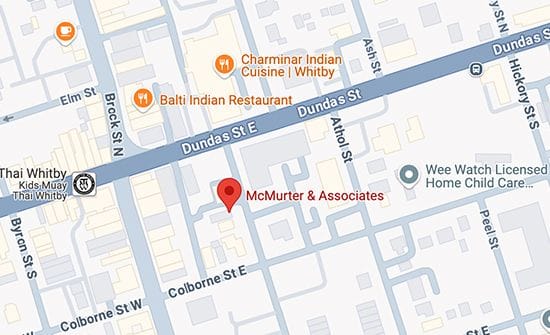
Brian McMurter is a real estate and estate planning lawyer at McMurter & Associates in Whitby, helping Durham Region, Ontario residents with estate planning and real estate law.
Contact McMurter & Associates Monday to Friday, 9 a.m. to 5 p.m. at info@mcmurter.com or call 1 800 756 7138 or 905 666 9200 to schedule a consultation.
Disclaimer: This article provides general information about Ontario law and is not a substitute for legal advice. Please speak with a lawyer about your specific circumstances before making decisions about real estate law and estate planning.
| Tags:Common-Law Partners in Ontario | McMurter & Associates |