&geometry(423x99) "McMurter & Associates")
What Happens to Your Home When You Die in Ontario?
The short answer: What happens to your home when you die in Ontario depends on three things: whether you have a valid will, how you hold title (joint tenancy or tenants-in-common), and your relationship status. Coordinating all three helps make sure your home goes to the people you intend, without delays or disputes.
For most Canadians, a home is the single largest asset they will ever own. That's why your will and estate plan should always consider how your property will be handled after you pass.
A well-prepared will can make sure your home goes to your intended heirs. Without one, provincial intestacy laws decide, and the result may not match your wishes.
Does how you take title to your home matter?
Yes. When you buy a home, how you take title has long-term consequences for your estate. It can even work as an estate planning tool.
| Joint tenancy | Tenants-in-common | |
|---|---|---|
| What happens on death? | The surviving owner automatically takes the deceased owner's share | The deceased owner's share passes under their will (or intestacy rules) |
| Can you leave your share to someone else? | No | Yes |
| Commonly used by | Married couples | Blended families, business partners, and investment properties |
| Probate? | The deceased's share passes directly to the surviving owner, outside the estate | The deceased's share generally forms part of the estate |
One thing to keep in mind with joint tenancy: when the last surviving owner passes away, the property becomes part of their estate. Joint ownership postpones the question but doesn't answer it, so your will still matters. For more on how the process works locally, see our page on probate in Durham Region.
Does your relationship status matter when buying a home?
It matters a great deal. In Ontario, your legal relationship status significantly affects what happens to your property after death.
Married spouses have clear inheritance rights under Ontario law. If someone dies without a will, a married spouse receives a preferential share of the estate first, currently $350,000 for deaths on or after March 1, 2021, plus a share of the rest if there are children.
Common-law partners are not treated the same way. If a common-law partner dies without a will, and the surviving partner hasn't been named as a beneficiary or co-owner, the survivor has no automatic right to any part of the estate. Instead, assets pass to the deceased's children and other legal relatives.
This is why estate planning is crucial for common-law couples. A properly drafted will, along with the right title, can make sure your partner is protected and your shared home stays with the person you intend.
For more, read Do Common-Law Partners Inherit in Ontario?
Should you add your child to your home's title?
It's understandable why some homeowners consider it. Adding a child to title as a joint tenant can look like an easy way to pass on your home and avoid probate.
We usually advise against it, because the approach often causes more harm than good:
- Your home becomes exposed to your child's financial problems. A divorce, bankruptcy, or lawsuit involving your child could put your home at risk.
- Family conflict may follow. Adding only one child to title can lead to disputes among your children.
- You lose full control. You'll need your child's consent to refinance or sell your own home.
- There may be tax consequences. These can include capital gains.
- Your intentions may be questioned. Without clear documentation, others may later argue about whether your child was meant to own the home or just hold it for you.
If your goal is to simplify the transfer of your property, there are safer and more effective estate planning tools available.
How can you protect your home in your estate plan?
- Make a will, or update the one you have. A clear, valid will is the foundation of your plan.
- Review how you hold title. Make sure joint tenancy or tenants-in-common actually fits your family.
- Coordinate your beneficiary designations. Your will, title, and registered accounts should work together, not against each other.
- Put powers of attorney in place. These let someone you trust manage your property and finances if you're unable to.
- Revisit your plan after major life changes. Marriage, separation, a new child, or buying or selling a home are all good moments to check in.
Contact
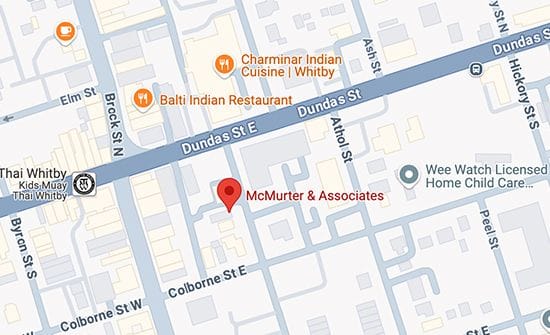
Brian McMurter is a real estate and estate planning lawyer at McMurter & Associates in Whitby, helping Durham Region, Ontario residents with estate planning and real estate law.
Contact McMurter & Associates Monday to Friday, 9 a.m. to 5 p.m. at info@mcmurter.com or call 1 800 756 7138 or 905 666 9200 to schedule a consultation.
Disclaimer: This article provides general information about Ontario law and is not a substitute for legal advice. Please speak with a lawyer about your specific circumstances before making decisions about real estate law and estate planning.
| Tags:Real Estate Law Guides | McMurter & Associates, Whitby |