&geometry(423x99) "McMurter & Associates")
What to Do When a Loved One Passes Away in Ontario: A Step-by-Step Guide
After a death in Ontario, the immediate priorities are registering the death, obtaining certified death certificates, securing the deceased's property, and locating the will. If the deceased owned real estate or accounts held solely in their name, the estate will likely need to go through probate — a court process that confirms the executor's (Estate Trustee's) authority to administer the estate. McMurter & Associates outlines the full process below, and offers a free downloadable checklist to help families stay organized.
Losing a loved one is never easy. While families are grieving, they are often also faced with a series of legal and administrative responsibilities that can feel overwhelming during an already difficult time.
Knowing what steps need to be taken, and in what order, can help ease some of that burden. From securing property to dealing with banks and government agencies, handling these matters properly can prevent delays, unnecessary stress, and costly mistakes. McMurter & Associates is here to guide you through the process and ensure your loved one's affairs are managed correctly.
To help families navigate this process with greater clarity and confidence, we have prepared a comprehensive "What to Do When a Loved One Passes Away" checklist outlining the key legal and administrative steps involved in Ontario estate administration.
Download the full checklist here
Key Steps in Ontario Estate Administration (At a Glance)
- Register the death and obtain certified death certificates through Service Ontario
- Notify banks, government agencies, and insurers
- Locate the will and identify the named Estate Trustee (executor)
- Determine whether probate is required (typically necessary when real estate or solely-held accounts are involved)
- Apply for a Certificate of Appointment of Estate Trustee and pay the Estate Administration Tax
- Secure the property, notify the home insurer of any vacancy, and keep utilities and property taxes up to date
- Sell property and pay outstanding debts and taxes once probate is granted
- Obtain a CRA Clearance Certificate before distributing assets
- Distribute the remaining estate assets according to the will
- Keep detailed records throughout to protect against personal liability as Estate Trustee
Real-Life Example: Settling an Estate in Whitby, Ontario
Susan, a Whitby resident, lost her father, John, unexpectedly. John was widowed and owned his Oshawa home solely in his name, along with several bank and investment accounts. Susan knew her father had a will, but was unsure where it was kept.
After the death was registered, Susan obtained certified death certificates through Service Ontario to notify banks, government agencies, and insurers. When she realized her father owned real estate and that she would likely need probate, Susan reached out to McMurter & Associates for legal guidance.
With their assistance, Susan located the will and learned she had been named as the Estate Trustee. Because the home and financial accounts were solely in John's name, probate was required. Susan applied for a Certificate of Appointment of Estate Trustee and paid the applicable Estate Administration Tax. She also secured the property, notified the home insurer of the vacancy, and ensured utilities and property taxes were maintained.
Once probate was granted, Susan sold the property, paid outstanding debts and taxes, obtained a CRA Clearance Certificate, and distributed the remaining estate assets in accordance with the will. Throughout the process, she kept detailed records to protect herself from personal liability as Estate Trustee.
When Should You Contact an Estate Lawyer in Ontario?
While some estates are relatively straightforward, many situations benefit from professional legal guidance to ensure the process is handled properly and without unnecessary delay.
You should consider speaking with a wills and estates lawyer if:
- The will is unclear or contested
- The estate is complex or involves family conflict
- Real estate needs to be transferred or sold
- A probate application is required
These matters carry legal and financial risks, and early advice can help prevent costly mistakes and disputes.
Working with a Durham Region estate lawyer who is familiar with local land registry offices, court procedures, and Ontario estate laws can make a meaningful difference. Local experience helps ensure estate administration moves forward efficiently, complies with all legal requirements, and provides peace of mind during an already difficult time.
Contact
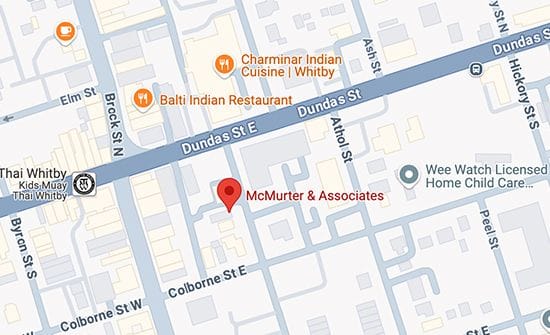
Brian McMurter is a real estate and estate planning lawyer at McMurter & Associates in Whitby, helping Durham Region, Ontario residents with estate planning.
Contact McMurter & Associates Monday to Friday, 9 a.m. to 5 p.m. at info@mcmurter.com or call 1 800 756 7138 or 905 666 9200 to schedule a consultation.
Disclaimer: This article provides general information about Ontario law and is not a substitute for legal advice. Please speak with a lawyer about your specific circumstances before making decisions about estate planning.
| Tags:Wills & Estates |